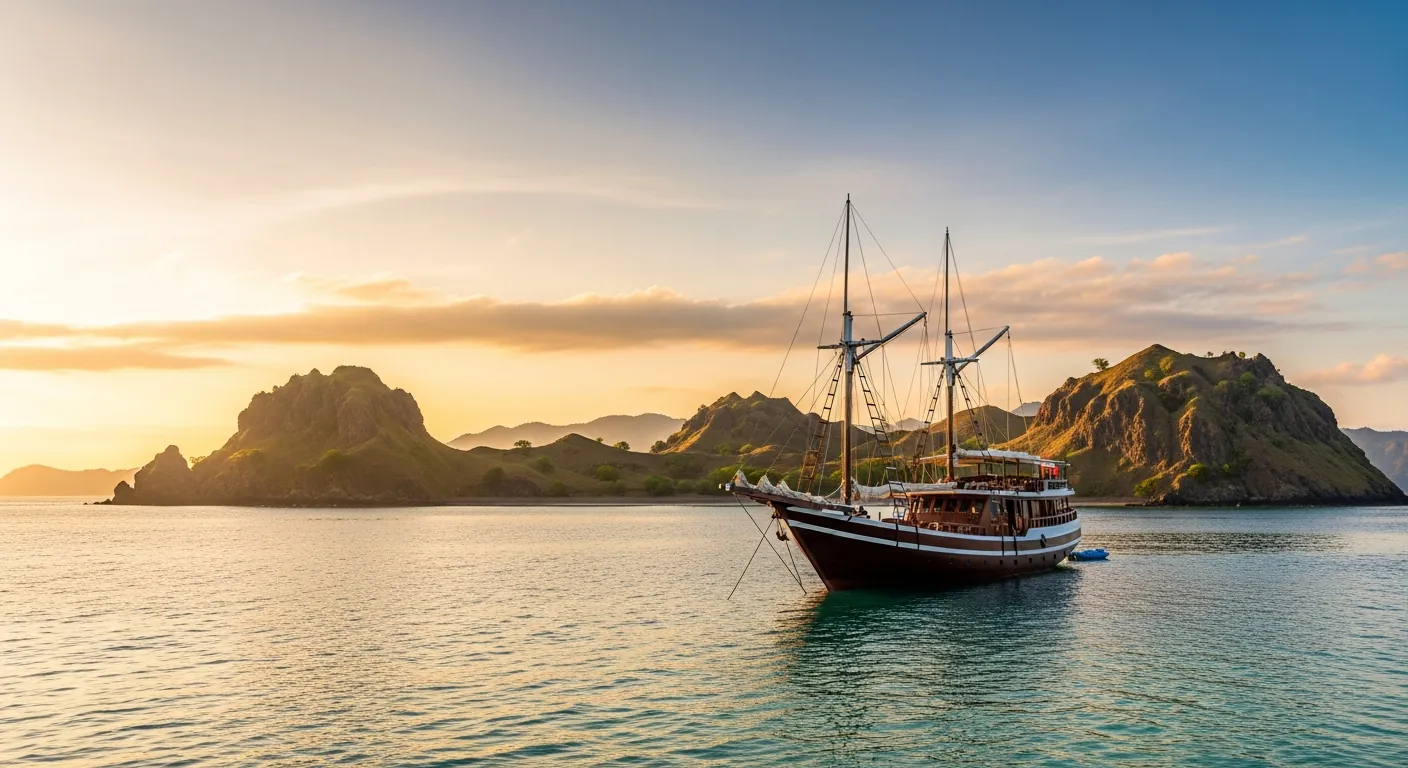
The scent of salt and sun-baked wood hangs in the air, a constant companion to the rhythmic creak of timbers as a phinisi cuts through the cerulean expanse of the Flores Sea. This is the gateway to Komodo, a realm where ancient mariners’ craft meets a wild, untamed archipelago.
Understanding the Phinisi: A Maritime Legacy
The traditional Indonesian phinisi, a two-masted wooden sailing vessel, is more than a boat; it represents centuries of maritime heritage. Originating from the Bugis and Makassar people of South Sulawesi, these vessels are renowned for their distinctive rig, which traditionally carries seven to eight sails on two masts. The construction of these magnificent boats is primarily centered in Bulukumba Regency, South Sulawesi, Indonesia. This shipbuilding tradition, deeply ingrained in the local culture, earned global recognition when the art of pinisi boatbuilding in South Sulawesi was approved for the UNESCO Representative List inscription in 2017. This acknowledgment highlights the intricate craftsmanship and the profound cultural significance of these vessels, which continue to be built with methods passed down through generations. For travelers seeking an authentic connection to Indonesian seafaring, understanding the phinisi’s lineage offers a deeper appreciation of their journey. The design allows for both speed and stability, making them suitable for understanding the diverse conditions of the Indonesian archipelago, from the calm waters of sheltered bays to the more open stretches of the Flores Sea. These vessels range in length, with many tourist phinisi measuring between 25 and 45 meters, accommodating various group sizes and itineraries. Learn more about the Pinisi.
Labuan Bajo: The Launchpad for Komodo Adventures
Labuan Bajo is strategically located on the western end of Flores Island in East Nusa Tenggara, Indonesia. This town serves as a primary maritime gateway to Komodo National Park, also in East Nusa Tenggara, Indonesia. As the capital of West Manggarai Regency, Labuan Bajo has transformed from a sleepy fishing village into a vibrant hub for marine tourism. Its international airport (Komodo Airport, LBJ) facilitates direct flights from major Indonesian cities like Jakarta and Denpasar, making it easily accessible for travelers. From Labuan Bajo, daily excursions and multi-day liveaboard trips depart, heading towards the iconic islands of Komodo, Rinca, and Padar. The town itself offers a range of accommodations, from budget guesthouses to luxury resorts, along with restaurants and dive shops. Development continues with infrastructure improvements supporting the growing tourism industry, including enhanced port facilities. The dry season, typically from April to October, offers the most favorable weather for sailing and diving, with calm seas and clear skies, while the wet season from November to March can bring stronger winds and higher rainfall, though sailing often continues with adjusted itineraries. Explore Labuan Bajo further.
Choosing Your Phinisi Experience: Cabin Share vs. Private Charter
The decision between a cabin share and a private phinisi charter significantly impacts the travel experience, particularly for those heading to Komodo National Park. Cabin share options are ideal for solo travelers, couples, or small groups of two to four people who prefer a more communal atmosphere and a lower per-person cost. These trips typically follow fixed itineraries, often three days and two nights, visiting popular sites like Padar Island viewpoint, Komodo Island for dragon spotting, and Manta Point for snorkeling. Prices for cabin shares can range from IDR 2,500,000 to IDR 7,000,000 per person, depending on the boat’s amenities and cabin type (e.g., shared dormitory, private cabin with ensuite). Private charters, conversely, offer unparalleled flexibility and privacy, catering to honeymooners, families, or groups of friends typically ranging from six to twenty guests. With a private charter, the itinerary can be fully customized, allowing for extended stays at preferred snorkeling spots, visits to less-frequented islands, or specific diving excursions. The cost for a private phinisi charter varies widely based on the boat’s size, age, luxury level, and duration of the trip, often starting from IDR 25,000,000 per day for smaller boats and ascending to IDR 100,000,000 or more per day for larger, more luxurious vessels. This option provides a dedicated crew, private chef, and the freedom to dictate the pace and focus of the Komodo adventure.
Itineraries and Komodo National Park Exploration
Typical liveaboard itineraries for Komodo National Park span 3 days and 2 nights or 4 days and 3 nights, though longer custom trips are available. A standard 3D/2N itinerary often includes a visit to Rinca Island or Komodo Island to see the Komodo dragons, a hike up Padar Island for panoramic views, snorkeling at Pink Beach, and a stop at Manta Point. Other popular sites include Taka Makassar, a sandbar emerging from the turquoise water, and Kanawa Island or Sebayur Island for further snorkeling and relaxation. Diving-focused itineraries may spend more time at renowned dive sites such as Batu Bolong, Siaba Besar, and Castle Rock, known for their strong currents and abundant marine life. Day-sailers from Labuan Bajo typically focus on one or two main attractions, often Padar Island and a snorkeling spot, or a direct trip to Rinca Island for dragon viewing, concluding by late afternoon. These shorter trips are suitable for travelers with limited time, often costing between IDR 500,000 and IDR 1,500,000 per person for group tours, with private day charters also an option.
What to Look for on a Phinisi: Safety, Comfort, and Features
Selecting the right phinisi involves careful consideration of several factors beyond just aesthetics. Safety is paramount, and travelers should inquire about the vessel’s compliance with Indonesian maritime safety regulations. This includes the presence of life jackets, life rafts, fire extinguishers, and emergency communication equipment. A reputable operator will also have a trained crew, including a captain certified for passenger transport and dive guides with valid certifications. Comfort features vary greatly between boats. For cabin shares, consider the cabin configuration (private with ensuite versus shared bathroom), air conditioning availability, and common area spaciousness. Private charters offer more amenities, often including multiple private cabins, hot showers, dedicated dining areas, sun decks, and sometimes even jacuzzis or kayaks. The age and maintenance of the boat are also critical; newer or well-maintained vessels typically offer a smoother experience. Power sources, fresh water capacity, and the quality of snorkeling or diving equipment provided (if applicable) are practical considerations. For honeymooners, privacy and romantic touches like private balconies or sunset dining setups are often priorities. Small groups might prioritize boats with communal spaces for socializing and comfortable cabins for each member.
Understanding the Flores Sea: Seasons and Conditions
The Flores Sea, bordering Komodo National Park, presents distinct sailing conditions throughout the year. The dry season, from April to October, is characterized by southeast monsoons, bringing consistent winds, clear skies, and calm seas, making it the most popular time for sailing. Water temperatures during this period typically range from 26°C to 29°C, offering excellent conditions for snorkeling and diving. Visibility underwater can exceed 25 meters. The wet season, from November to March, is influenced by the northwest monsoon. While this period experiences higher rainfall and potentially stronger winds, particularly in December and January, it also brings lush green landscapes to the islands. Sailing is still possible, but itineraries might be adjusted to account for weather changes. Some dive sites, especially those exposed to the open sea, might experience stronger currents or reduced visibility during this period. Operators are generally experienced in understanding these seasonal variations, prioritizing passenger safety and comfort. It’s advisable to check weather forecasts closer to the travel date and communicate directly with operators about specific concerns regarding the sailing season. Explore the Flores Sea.
To begin planning your bespoke voyage through the Komodo archipelago, explore the independent editorial guide at Bajo Phinisi for detailed insights and vessel comparisons.
Related reading
Operator partner: Komodo Luxury – a registered Indonesian PT (PT Komodo Bahari Nusantara, KBLI 79120) under Juara Holding Group Limited with 1,500+ verified guest reviews (4.9/5 across Google and TripAdvisor). See their phinisi charters in Labuan Bajo.